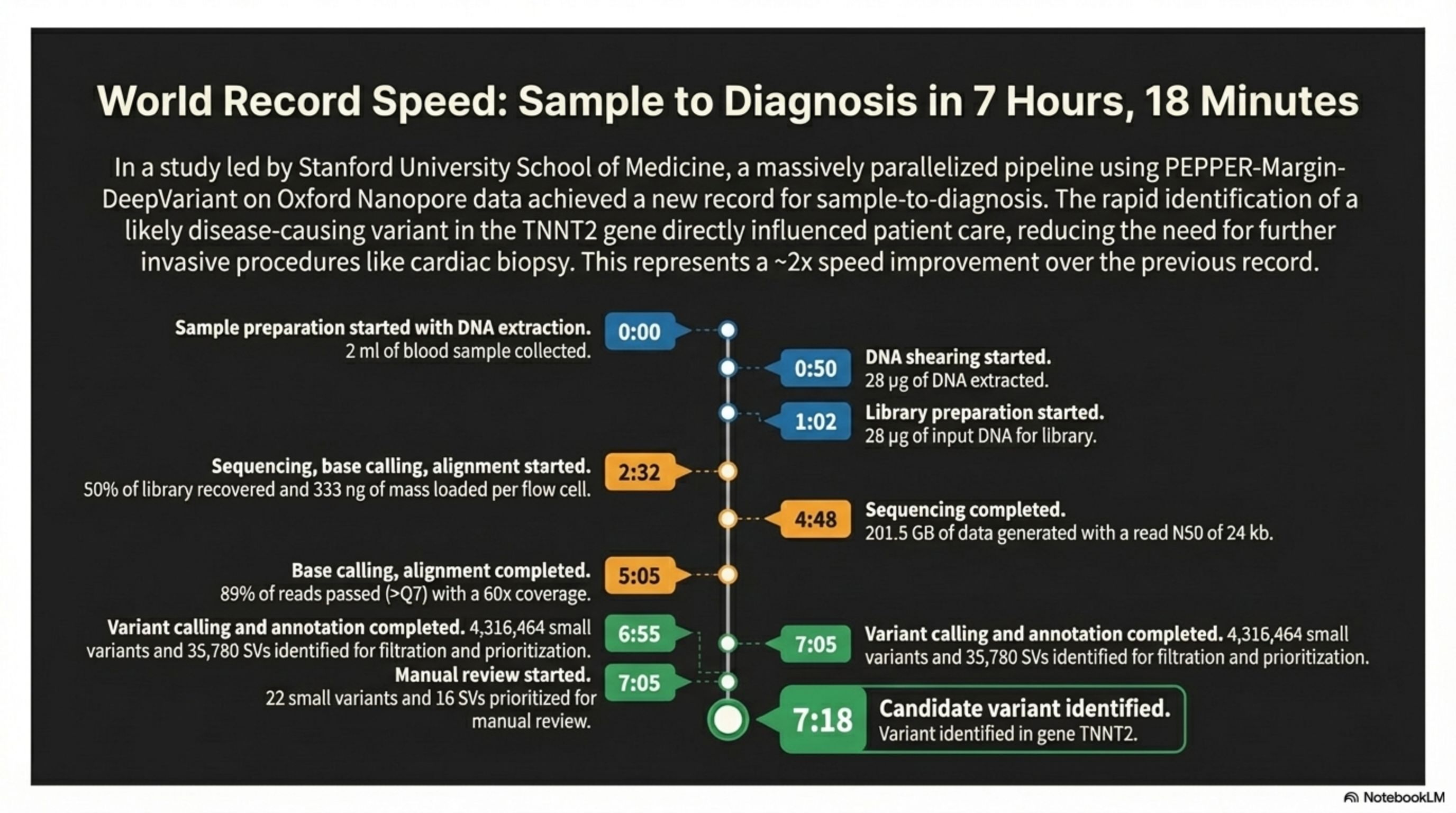
Variant identified in gene TNNT2.
Candidate variant identified.
variants and 35,780 SVs identified for filtration and prioritization.
Variant calling and annotation completed.
Variant calling and annotation completed.4,316,464 small variants and 3S,780 SVs identified for fiitration and prioritization. Manual review started. 22 small variants and 16 SVs prioritized for manual review.
89% of reads passed (>Q7) with a 60x coverage.
Base calling, alignment completed.
201.5 GB of data generated with a read NS0 of 24 kb.
Sequencing completed.
50% of library recovered and 333 ng of mass loaded per flow cell.
Sequencing, base calling, alignment started.
28ug of input DNA for library.
Library preparation started.
28 pg of DNA extracted.
DNA shearing started.
2 ml of blood sample collected.
Sample preparation started with DNA extraction.
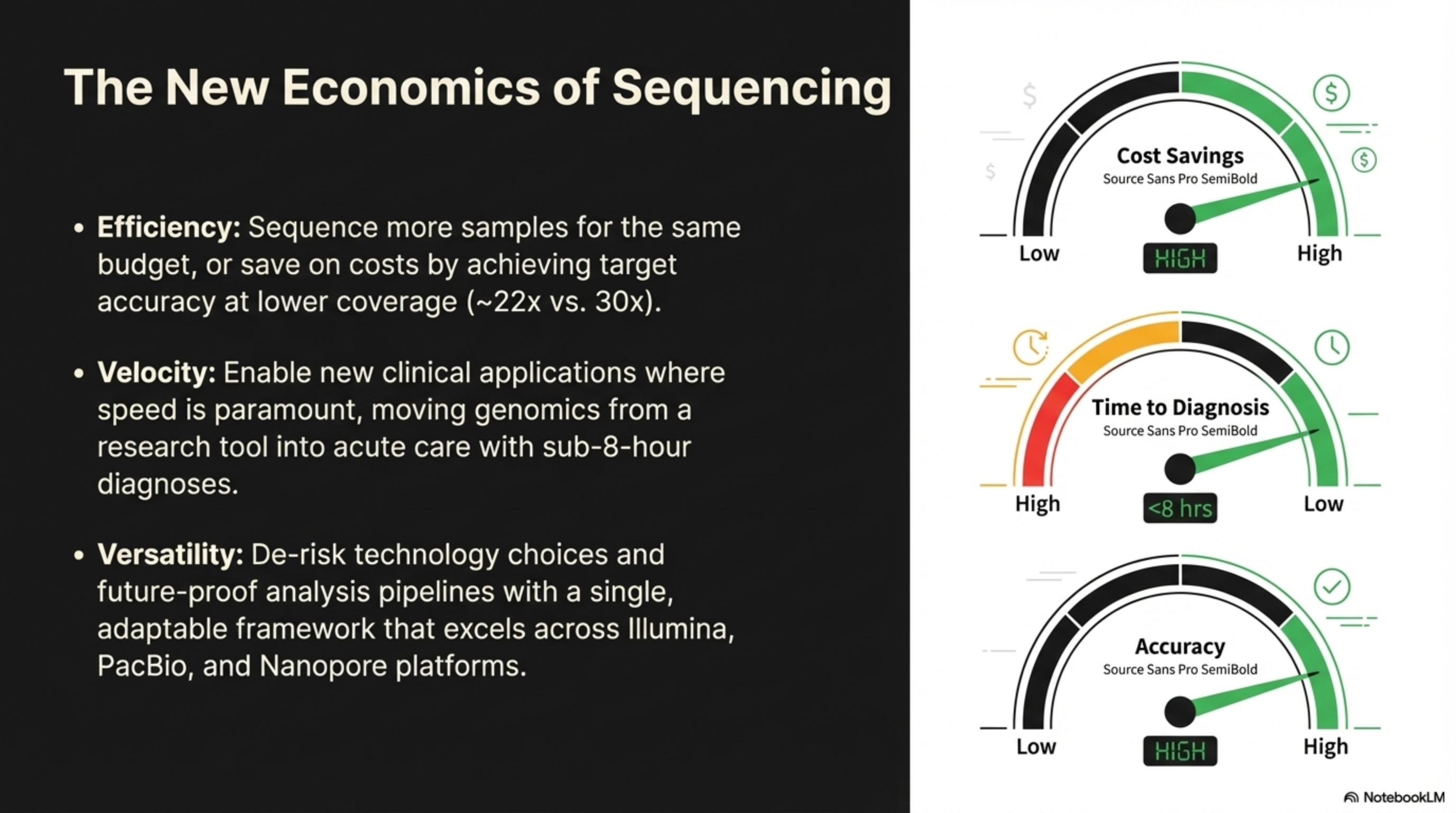
In a study led by Stanford University School of Medicine, a massively parallelized pipeline using PEPPER-Margin- DeepVariant on Oxford Nanopore data achieved a new record for sample-to-diagnosis. The rapid identification of a likely disease-causing variant in the TNNT2 gene directly influenced patient care, reducing the need for further invasive procedures like cardiac biopsy. This represents a ~2x speed improvement over the previous record.
World Record Speed: Sample to Diagnosis in 7 Hours, 18 Minutes